

Every psychologist classification you need to know about, whether you're a student or client.
The different types of psychologist are defined by qualifications and specialisations. Registered psychologists are the most numerous, followed by clinical psychologists.
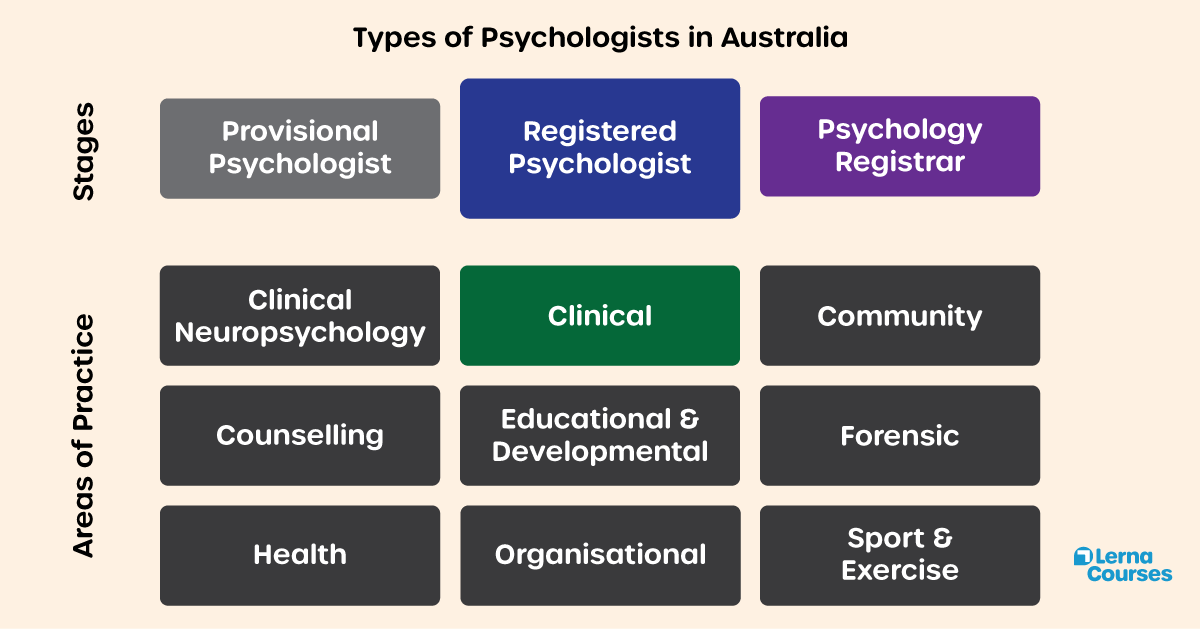
Stages of Professional Development
Some psychologists are in training and practicing under supervision. A provisional psychologist is preparing for general registration. Once qualified, they can work as a registered psychologist. In turn, registered psychologists may choose to seek endorsement in an area of practice, requiring that they spend up to two years as a registrar.

A provisional psychologist has at least four years of education and works under supervision. This temporary role is a step towards full registration.
They are gaining the practical experience needed for independent practice. For example, they may be doing an unpaid student placement or a paid internship.

Anyone calling themselves a psychologist in Australia must have general registration. However, the term registered psychologist often refers to those in general practice.
General psychologists are fully qualified to perform most tasks, including diagnoses within their field of expertise. Many also specialise, though without formally gaining endorsement in one of the nine areas of practice.

Psychology registrars are registered psychologists aiming to specialise in one of nine practice areas. Most are clinical psychology registrars, as this is the most in-demand specialty.
Eligibility for the registrar program includes general registration and a specialist postgraduate qualification. The program requires supervised practice and professional development.
Areas of Practice
Australia defines nine areas of practice endorsement with protected titles such as clinical psychologist, clinical neuropsychologist, and forensic psychologist. Earning one of these titles requires psychologists to complete an approved postgraduate qualification and supervised training in the discipline.

A clinical neuropsychologist has expertise in how brain conditions affect cognition and behaviour. They focus on disorders like traumatic brain injuries, strokes, dementia, epilepsy, developmental problems, and psychiatric conditions.
Neuropsychologists work in hospitals, rehabilitation facilities, private practices, and research settings. Use various tests, they assess, diagnose, and treat the disorders.

Clinical psychologists assess, diagnose, and treat mental health disorders, including anxiety, depression, PTSD, and behavioral problems. Their therapy aims to improves thoughts, behaviours, and mental health.
Work environments include hospitals, private practices, schools, and community services. They diagnose issues through interviews and tests, and develop treatment plans. Interventions include cognitive-behavioral therapy, psychoeducation, and skills training.

Community psychologists work in agencies, non-profits, and schools to address social justice and well-being. They assess community needs, design interventions, and advocate for policy changes.
They apply psychology to societal problems. For example, they may develop programs to reduce homelessness, create strategies for mental health awareness, and support educational initiatives.

Counselling psychologists provide psychotherapy for mental health issues like anxiety and depression. Their goal is to help people improve functioning, life satisfaction, and resilience.
These professionals work with individuals, couples, and families on issues including trauma, relationship problems, and life transitions. They employ strategies such as cognitive-behavioral therapy and person-centered therapy.

Educational and developmental psychologists address learning, behavioural, and developmental issues. They assess needs, provide counselling, design interventions, and offer strategies. The goal is to enhance academic, social, and personal outcomes.
Working in schools, healthcare facilities, and private practices, these highly trained professionals service all age groups. Interventions might target conditions like dyslexia and ADHD or assist clients during life transitions.

Forensic psychologists work in legal contexts to support justice by assessing mental states and providing expert testimony. They focus on individuals with mental health issues who are involved with or at risk of entering the criminal justice system.
Their skills are essential in courts, prisons, and law enforcement agencies. They ensure fair treatment for people with behavioural issues and enhance community safety.
Health psychologists aim to improve health, prevent illness, and manage diseases. Their goals include reducing stress, improving dietary awareness, and providing addiction recovery support. Approaches often involve behavioral therapy and lifestyle coaching.
These specialists work in hospitals, clinics, and wellness programs. Their clients may be seeking help with stress, addiction, dietary issues, or chronic disease management.

Organisational psychologists cultivate a work culture that supports business objectives and job satisfaction. They survey employees and apply psychological principles to improve workplace performance and employee well-being.
Methods include productivity initiatives, guiding talent recruitment, and developing leadership. They address staff conflicts, motivation issues, and adaptability challenges using evidence-based methods.

Sport and exercise psychologists work to boost athletic performance and physical activity for health. They tackle challenges like stress, motivation, and team dynamics, employing strategies like cognitive-behavioral techniques and resilience training.
Working with AFL, NRL, and Olympic athletes, they play a key role in high-performance sports. They also support everyday individuals to achieve fitness goals.
Informal Specialisations
Outside the nine areas of practice endorsement, there are many specialisations within psychology. Registered psychologists, also known as general psychologists, can informally specialise in many of the following fields. For completeness, we've also included services outside or overlapping with psychology, such as psychiatry and counselling.
Other psychologist types and practitioners
| Specialisation | Description |
|---|---|
| ADHD | ADHD psychologists assess and treat this disorder, often within child or educational psychology. |
| Anxiety | Anxiety psychologists identify and treat forms of anxiousness, commonly within clinical psychology. |
| Behavioural | Behavioural psychologists apply behaviour therapy to modify harmful behaviours, working across domains. |
| Bulk Billing | Bulk billing psychologists accept Medicare as full payment; any psychologist can offer this. |
| Child | Child psychologists treat well-being and developmental issues, often in educational & developmental psychology. |
| Christian | Christian psychologists integrate psychological therapy with Christian beliefs, available to registered psychologists. |
| Counsellor | Counsellors, trained in discussing personal and psychological issues, are not typically psychologists. |
| Criminal | Criminal psychologists specialise in criminal behaviour, often within forensic psychology. |
| Depression | Depression psychologists diagnose and treat depression, a specialisation for clinical psychologists. |
| Eating Disorder | Eating disorder psychologists treat conditions like anorexia and bulimia, often in clinical or health psychology. |
| Family | Family psychologists address family dynamics, relationships, and parenting. |
| Grief | Grief psychologists provide support for loss and grief, typically general psychologists using therapeutic models. |
| Medicare | Medicare rebate psychologists work in areas eligible for Medicare rebates, providing services with a referral. |
| Mental Health | Mental health psychologists, mainly clinical psychologists, specialise in mental health disorders across the lifespan. |
| NDIS | NDIS psychologists deliver services under this disability scheme, usually in clinical, counselling, or health areas. |
| OCD | OCD psychologists specialise in treating Obsessive-Compulsive Disorder with ERP and CBT, within clinical psychology. |
| Paediatric | Paediatric psychologists focus on children and adolescent issues, in educational and developmental psychology. |
| Perinatal | Perinatal psychologists support women during and after pregnancy, often as clinical or health psychologists. |
| Psychiatrist | Psychiatrists, medical doctors who can prescribe medications, are not psychologists. |
| Psychotherapist | Psychotherapists offer therapy; may be clinical psychologists, counsellors, or other professionals. |
| PTSD | PTSD psychologists treat Post-Traumatic Stress Disorder with specialised therapies, within clinical psychology. |
| Relationship | Relationship psychologists help couples and families to improve relationships, within counselling psychology. |
| School | School psychologists support student learning, behaviour, and well-being, typically within educational settings. |
| Sleep | Sleep psychologists treat sleep disorders and promote healthy sleep habits, as clinical or health psychologists. |
| Telehealth | Telehealth psychologists deliver services online, across specialisations. |
| Therapist | Therapists, professionals offering psychological therapy, include psychologists and counsellors. |
| Trauma | Trauma psychologists treat individuals with trauma and stress disorders, within clinical psychology. |
Note: Regarding the diagnosis and treatment of complex mental health conditions, services should only be provided by a psychologist with an appropriate area of practice endorsement.