
Community Psychologist
Community psychologists use research, policy and local programs to improve wellbeing, address social issues and support community resilience.
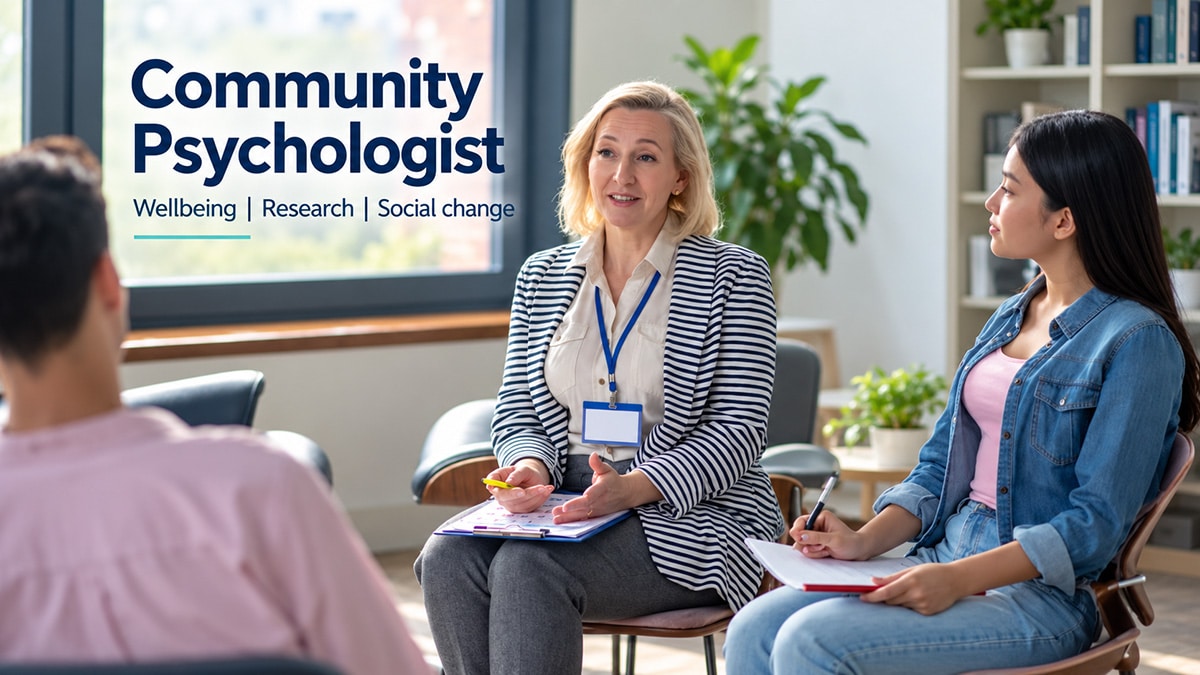
Community psychology is one of nine areas of practice endorsement recognised by the Psychology Board of Australia. Practitioners aim to enhance individual and community functioning. Community psychologists address social justice and wellbeing through research, policy, and services.
As a community psychologist, your job is to collaborate with communities and organisations to identify and address social issues. Community development work aims to improve wellbeing and empower individuals and groups. Strategies that strengthen social support and improve access to local resources can build community resilience.
What is Community Psychology?
Community psychology is a discipline that focuses on understanding individuals within their social, cultural, economic, and environmental contexts. Community interventions aim to enhance wellbeing and promote social justice by addressing broader societal issues that impact groups of people.
Psychologists in this field work collaboratively with groups and organisations. Community psychology practitioners assess and intervene in local issues, advocate for systemic change, and support the development of policies that benefit collective wellbeing.
Role of Community Psychologists

Community psychologists help build healthier, more equitable communities. Local projects may address immediate crises or help respond to long-term social change. Cross-sector partnerships promote mental health, social welfare, and community empowerment.
Community psychologists can work as educators, professors, program directors, consultants, policy developers, evaluators, and researchers.
Community psychology services assist clients ranging from local government bodies and non-profit organisations to vulnerable populations and individual community members. Research, advocacy and community programs help build resilient, inclusive communities capable of facing contemporary challenges.
Related: 12 Types of Psychologists in Australia
How Do I Become a Community Psychologist?

Australia’s last dedicated community psychology master’s, at Victoria University, has closed. Prospective students should confirm current approved training options with the Psychology Board before planning for endorsement. Standard requirements for the master’s route are:
- To become a community psychologist in Australia, complete an accredited 3-year bachelor degree in psychology. If you have a different degree, consider accredited Graduate Diplomas of Psychology.
- Next, do an accredited 1-year honours degree or Graduate Diploma in Psychology (Advanced) for deeper knowledge and research skills. Completion of the accredited 4-year sequence prepares you for postgraduate professional training.
- Then, complete a Board-approved 2-year master’s specialising in community psychology, where available. Provisional registration is required during this professional training.
- After completing the approved master’s, obtain general registration with the Psychology Board of Australia.
- Complete a Board-approved registrar program in community psychology, requiring 2 years of supervised practice on a full-time equivalent basis for master’s graduates. After completing the program, apply for endorsement in community psychology.
Related: Psychology Board – Guidelines on Area of Practice Endorsements