Top 10 Most In-Demand Skills for the Future

While it may feel like AI is transforming how professionals work, the in-demand skills of today and the future form a relatively stable set. AI literacy takes the top position in our list, but many of the remaining skills are timeless abilities you need for professional success.
Our top 10 draws on employer surveys, employment projections and common workplace requirements. Each section explains why a skill is valuable and how you can demonstrate your ability early in your career.
1. AI Literacy
AI literacy means knowing how to use artificial intelligence effectively and recognize its limitations. Employers value people who can choose appropriate tools, give clear instructions and check the results.
In its 2026 Job Outlook update, NACE reports that 35% of entry-level jobs require AI skills. Wider adoption of AI across workplace software should increase the value of using the technology competently.
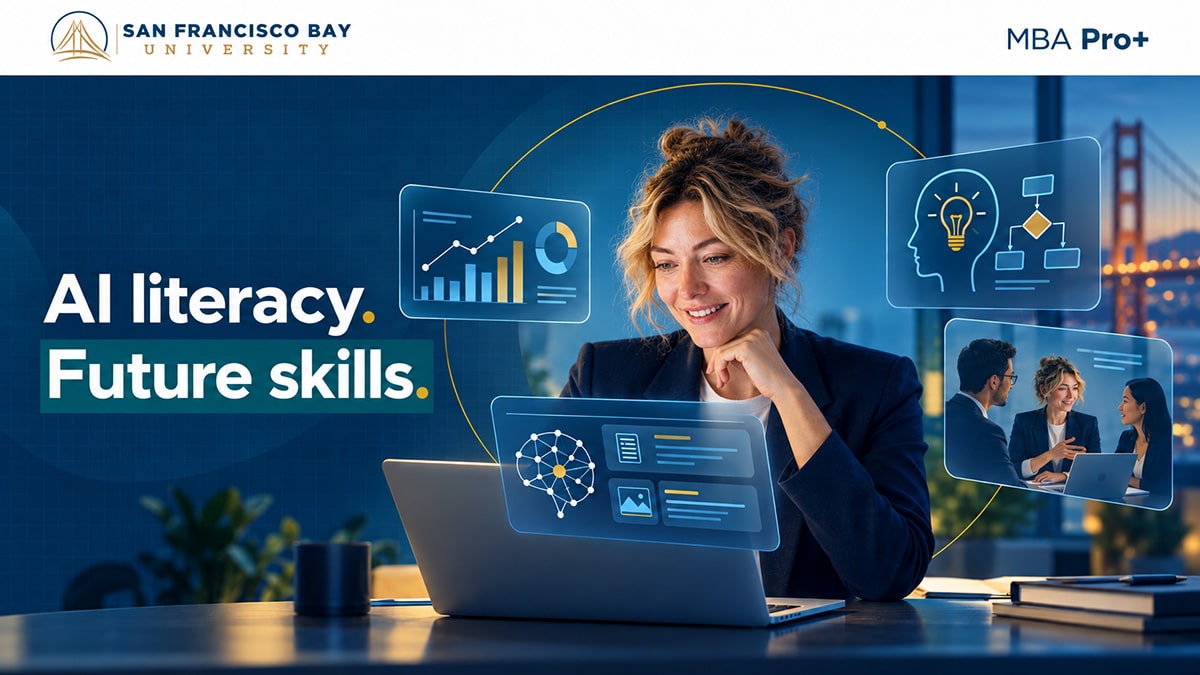
Business education offers opportunities to develop AI literacy through management tasks. San Francisco Bay University offers an online MBA Pro+ that includes Management and Leadership in AI. AI-supported feedback also gives students experience using the technology throughout their studies.
How to show AI literacy: Examples of AI-assisted research, writing or analysis can demonstrate proficiency. Explaining how you verified or improved the output also shows judgment.
2. Data Analysis
Data analysis means examining information to identify patterns and draw useful conclusions. Employers need people who can interpret figures, assess performance and explain what the results suggest.
At the specialist level, the U.S. Bureau of Labor Statistics projects 35% growth in data scientist employment from 2025 to 2035. Increasing volumes of data and demand for informed business decisions are expected to drive growth.
How to show data analysis skills: A spreadsheet project, survey analysis or report can demonstrate your ability. Explaining the question you investigated, your method and what you found gives employers evidence of your skills.
Related: How Hard Is Data Analytics to Learn and Do?
3. Critical Thinking
Critical thinking is the ability to assess information and reach reasoned conclusions. Employers value people who can question assumptions and judge whether the evidence supports a decision.
AI-generated answers can sound convincing while containing errors or unsupported claims. Demand for critical thinking skills should stay strong as more workplace decisions draw on automated research and analysis.
How to show critical thinking: Thoughtful questions and explanations grounded in evidence show how you reason. Being willing to revise a conclusion when better information appears also demonstrates sound judgment.
4. Creative Problem-Solving
Creative problem-solving means finding useful solutions when standard approaches fall short. Employers value people who can question assumptions, connect ideas and suggest a workable way forward.
Problem-solving skills were sought by 82% of employers responding to the 2026 NACE survey. New technologies and changing business conditions should sustain demand for people who can solve unfamiliar problems.
How to show creative problem-solving: Offering alternative approaches shows you can look beyond established methods. A brief example of finding a cheaper, faster or more effective solution can demonstrate your ability.
5. Adaptability
Adaptability is the ability to adjust when priorities, responsibilities or working methods change. Employers value people who can learn from feedback and stay effective when familiar approaches no longer work.
In the 2026 NACE survey, 58% of responding employers sought flexibility or adaptability on resumes. Changes in technology and job responsibilities should sustain demand for people willing to keep learning.
How to show adaptability: Openness to feedback and a constructive attitude toward change signal adaptability. Examples of learning a new process or adjusting to unexpected requirements can support your application.
6. Digital Literacy
Digital literacy is the ability to use software and online systems effectively. Employers expect you to manage documents, work in shared platforms and learn unfamiliar tools without constant assistance.

Everyday work depends on digital skills such as spreadsheet analysis, professional email and cloud collaboration. As software evolves, employers will continue to value people who can apply those skills across different platforms.
How to show digital literacy: Your resume can name the software you use and the tasks you can complete. Examples from assignments, part-time work or personal projects help demonstrate your proficiency.
7. Cybersecurity Awareness
Cybersecurity awareness means recognizing digital threats and handling information safely. Employees need to spot suspicious messages, protect login details and avoid exposing company or customer data.
Networks and cyber security rank second among the fastest-growing skill areas in the Future of Jobs Report 2025. Growing dependence on digital systems should keep security awareness valuable across professional roles.
How to show cybersecurity awareness: Knowing how to check suspicious requests, secure accounts and manage access to shared files shows useful judgment. Relevant training or examples from work and study can support your application.
Related: Is Cyber Security Hard to Learn? How Hard?
8. Communication
Communication means expressing ideas clearly and understanding what others mean. Employers need people who can explain their work, ask useful questions and adapt their message to the audience.
In the 2026 NACE survey, 78% of responding employers sought verbal communication skills on resumes, while 72% sought written skills. Even when AI drafts text, workers need judgment about the message, tone and intended audience.
How to show communication skills: Clear application emails and direct interview answers demonstrate your ability immediately. Relevant questions and concise explanations also show you can exchange information effectively.
9. Emotional Intelligence
Emotional intelligence is the ability to recognize emotions and respond appropriately. Employers value people who understand how others are feeling and manage their own reactions under pressure.
Empathy and active listening feature among the ten core skills in the Future of Jobs Report 2025. Relationships with colleagues and customers give emotional intelligence lasting value as more technical tasks become automated.
How to show emotional intelligence: People notice whether you pick up on discomfort, respond tactfully and consider their concerns. Being receptive to feedback also shows you can manage your own reactions.
10. Leadership
For professional roles, employers value individuals with the ability to lead. You should be able to take initiative as required and give others direction towards achieving goals.
Employers need people who can guide teams through change. Leadership and social influence rank third among core skills in the Future of Jobs Report 2025 and are expected to grow in importance through 2030.
How to show leadership ability: Clear communication, confidence and a willingness to contribute ideas signal leadership potential. People also notice how well you listen and handle disagreement.
Related: Why Study Leadership and Management?
Which Skills Are Becoming Obsolete?
While AI can make specific skills obsolete, the broader set of skills required to work as a professional in a given field is harder to replace. People still need to understand the work, coordinate tasks and judge whether the results meet the goal.
An August 2026 Stanford analysis found no evidence of widespread job displacement across the economy, but weaker hiring of young workers in occupations more exposed to AI. An occupation can survive while offering fewer entry-level opportunities.
Likely shifts in the value of skills include:
| Tasks exposed to automation | Skills likely to gain importance |
|---|---|
| Routine data entry | Checking data quality and investigating errors |
| Producing standard reports | Choosing useful measures and interpreting results |
| Writing generic first drafts | Setting the brief, verifying claims and editing for the audience |
| Writing routine code | Defining requirements, testing software and integrating systems |
Subject knowledge helps professionals spot mistakes, handle exceptions and decide what to do next. As individual production steps become automated, greater value is likely to come from directing the work and taking responsibility for the finished result.