How to Pack for Study Abroad in Australia: 6 Essentials for 2027
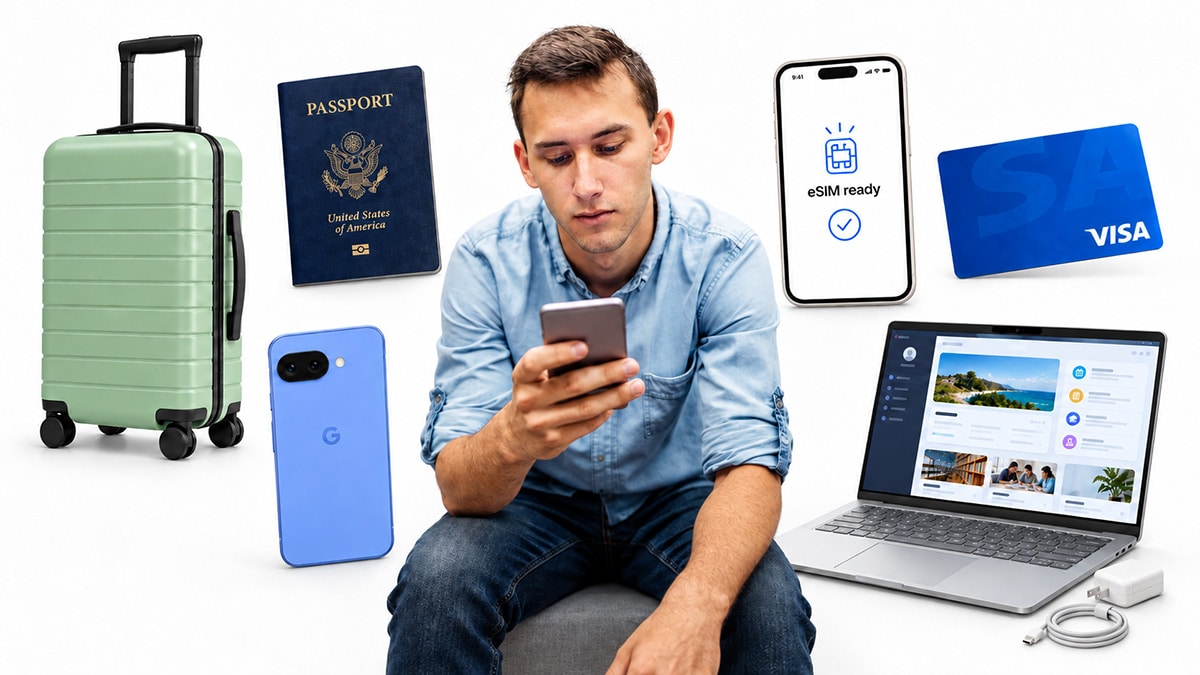
To pack successfully for study abroad in Australia, focus on the few things you genuinely need to bring with you. Essential items include your passport, phone, eSIM, credit or debit card, laptop and travel case. Almost everything else is optional.
We analysed packing advice from various sources, then removed many common suggestions because they are not actually required. You do not need a folder of document printouts, for example. You also do not need many spare clothes or ordinary items you can buy cheaply in Australia.
I recommend travelling light. Try to avoid a large suitcase. Decide what your travel bags look like, such as a standard travel case plus a slim laptop bag. Pack your essentials first, then add whatever else you like without weighing down or overstuffing your bags.
1. Travel Case
Bring a cabin-size travel case instead of a large suitcase. A smaller case is easier to move through airports, trains, buses and student accommodation. It also helps you avoid checked-bag fees on domestic flights. Weight limits still apply, so pack light.
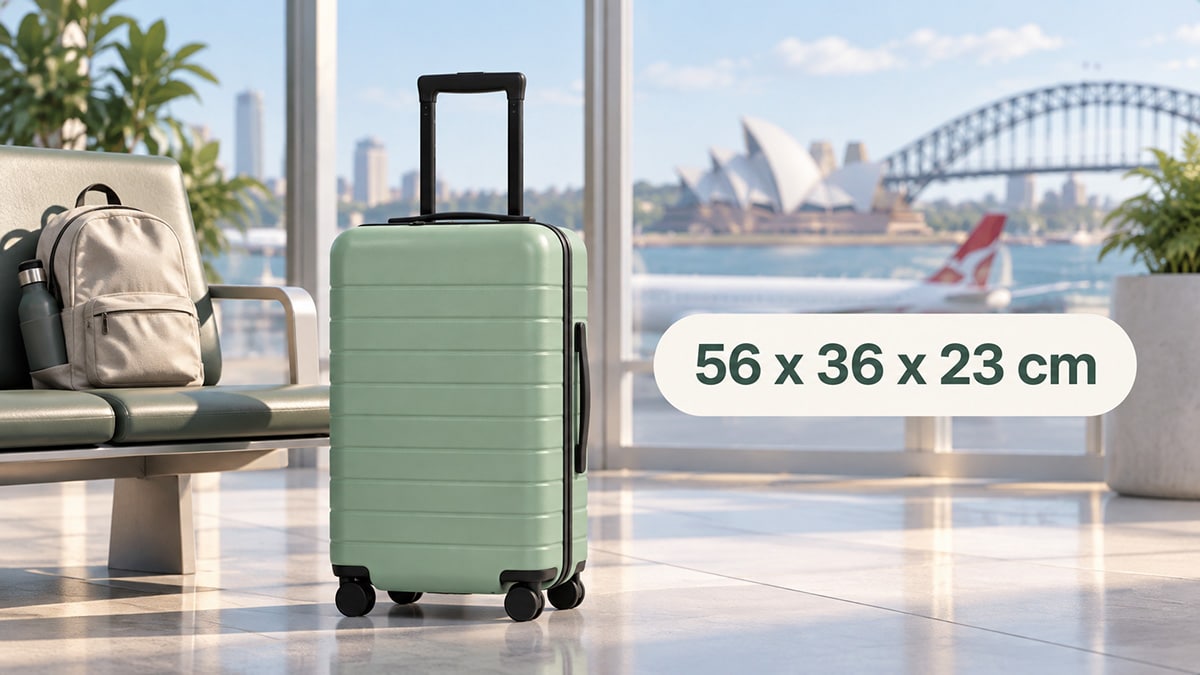
Size target: Aim for a case no larger than 56 cm x 36 cm x 23 cm, including wheels and handles. The size matches the standard carry-on limit used by Virgin Australia and Jetstar. Qantas is slightly more generous for some domestic fares.
Travel case idea: The Away Carry-On measures 55.1 cm x 34.8 cm x 22.9 cm, so it stays within the common Australian domestic limit. A hard shell protects your things, and the size keeps your packing under control.
After arrival: A cabin-size case remains useful for weekend trips, semester breaks and visits to other Australian cities. Large suitcases become dead weight once you have unpacked.
2. Passport
Bring your passport in your carry-on, not your checked luggage. Australia requires arriving passengers to have a valid passport or travel document. Your student visa is electronic, so it is linked to the passport used in your visa application.
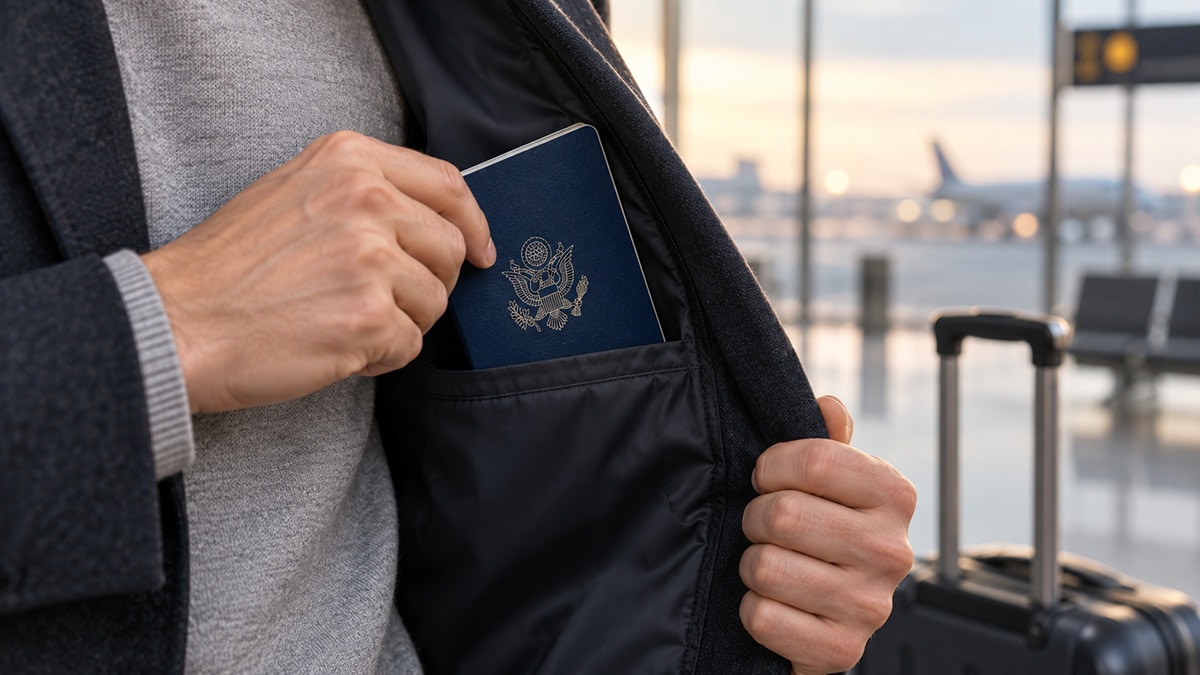
Before flying: Check that your passport details match your visa grant notice. If you renew your passport after the visa is granted, update your passport details with Home Affairs before travelling.
Digital copies: Store offline copies of your visa grant notice, Confirmation of Enrolment, OSHC details, accommodation address and passport photo page. Keep a second copy in cloud storage in case your phone is lost.
Printouts: Save your visa grant notice offline. A printed copy is optional and mainly useful if airline staff ask for visa details at check-in.
Related: How to Answer Genuine Student Questions | Australian Visa
3. Phone
Bring the phone you already use if it is a recent unlocked model. Australia works like other developed countries for normal mobile use, but 3G has been switched off. Older phones and some imported Android models may fail if they lack 4G VoLTE, including emergency calling.
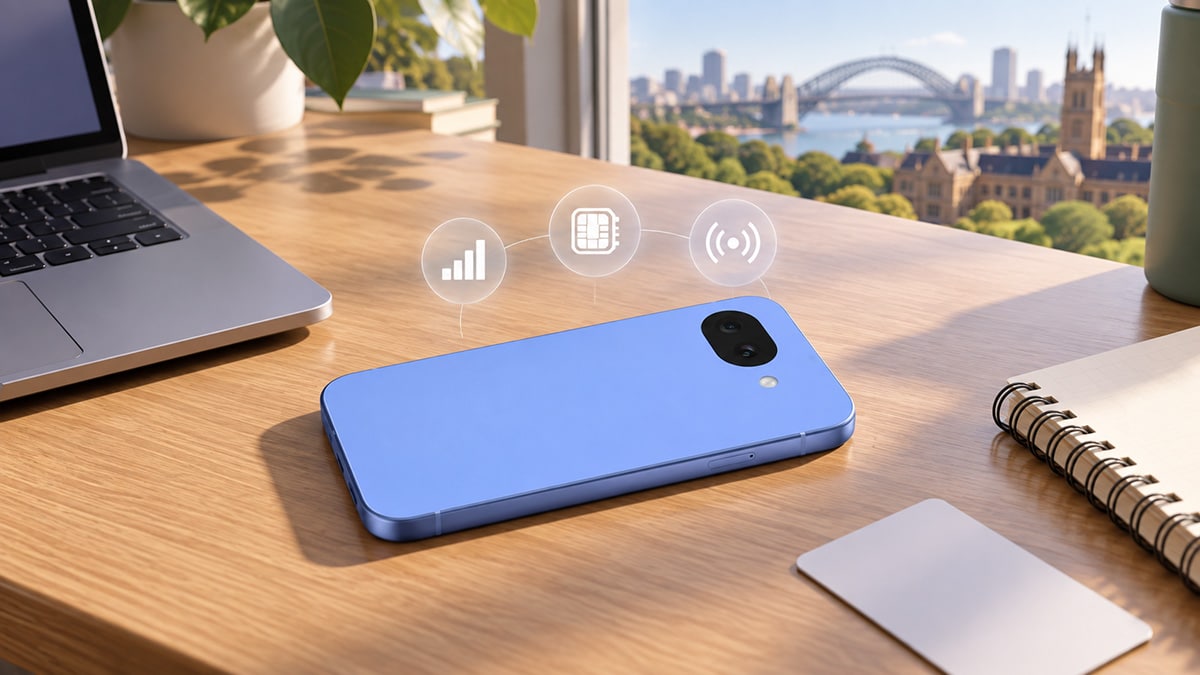
If buying new: Choose an unlocked iPhone, Google Pixel or Samsung Galaxy with eSIM support, 4G VoLTE and 4G Band 28. Avoid cheap grey-import Android phones unless Australian network compatibility is clear.
Phone idea: A current Google Pixel A-series phone is a good student choice because it offers eSIM, a physical SIM slot, long software support and enough camera quality for ID scans, course apps and travel photos.
4. eSIM
Bring an eSIM if your phone supports one. Mobile data on arrival helps with airport transport, maps, accommodation messages, bank logins and university access. Recent iPhones and Pixels usually support eSIM; Samsung and budget Android support depends on the exact model.
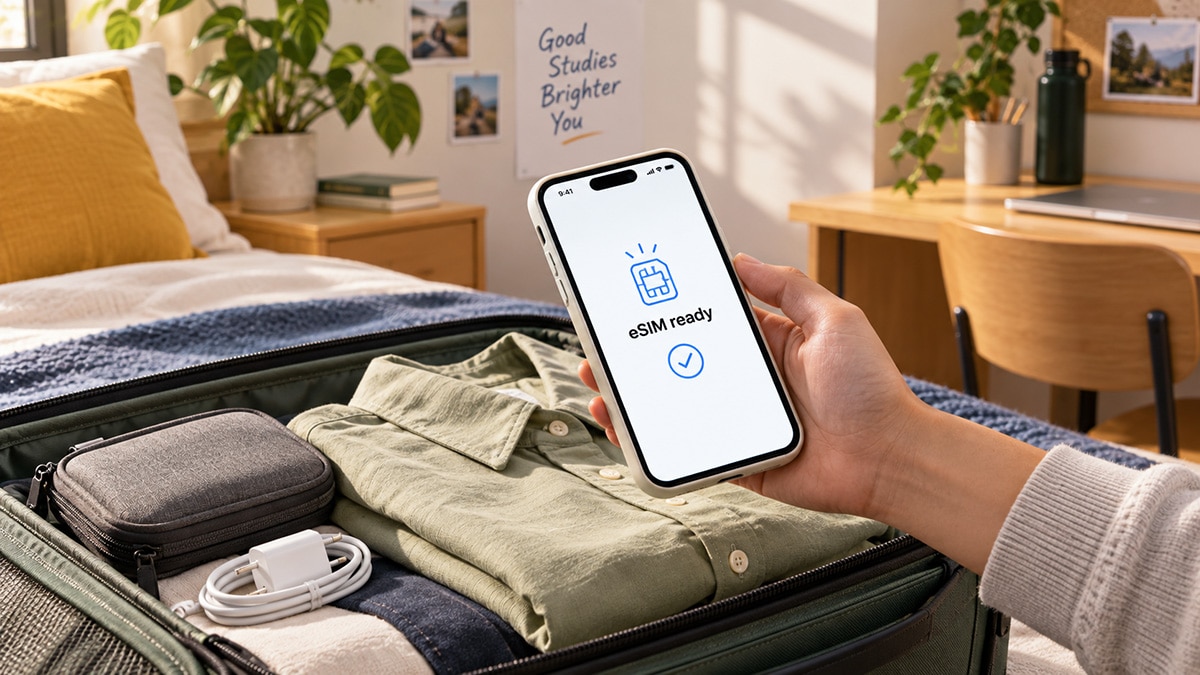
eSIM idea: A Holafly eSIM plan for Australia is a good arrival option because it can be bought before departure, installed over Wi-Fi, then switched on after landing. Having data already working saves you from finding a phone shop on day one.
Backup plan: If eSIM is not available or does not work, make buying a prepaid SIM card a priority after arrival. Telstra, Vodafone and Optus all sell prepaid mobile plans in Australia. Telstra is better for regional travel, while Vodafone can be cheaper around capital cities.
Australian number: A travel eSIM may give you data without a local phone number. For a semester or longer, switch to a prepaid Australian plan so you have a number for forms, job applications, deliveries and two-factor authentication.
5. Credit or Debit Card
Bring a Visa or Mastercard debit or credit card for arrival in Australia. Card payment is normal in supermarkets, cafés, shops, transport apps and online checkouts. American Express is accepted in many places, but it should not be your only card.

Pre-arrival card: A multi-currency card such as Wise is a good option before flying. You can hold Australian dollars, spend by card or phone wallet, and avoid many foreign transaction fees charged by ordinary bank cards.
Australian bank account: For a semester or longer, open a local account after arrival or shortly before flying. CommBank and Westpac let international students start online, with passport verification after landing.
Backup: Bring the physical card even if you use Apple Pay or Google Wallet. Phones can run flat or fail verification. Choose Australian dollars when a terminal asks which currency to use.
6. Laptop
A laptop belongs on a study abroad packing list. Australian students use laptops to access student portals, learning materials, classes, assignments, exams and admin systems. An everyday 14-inch Windows laptop is enough for most courses.
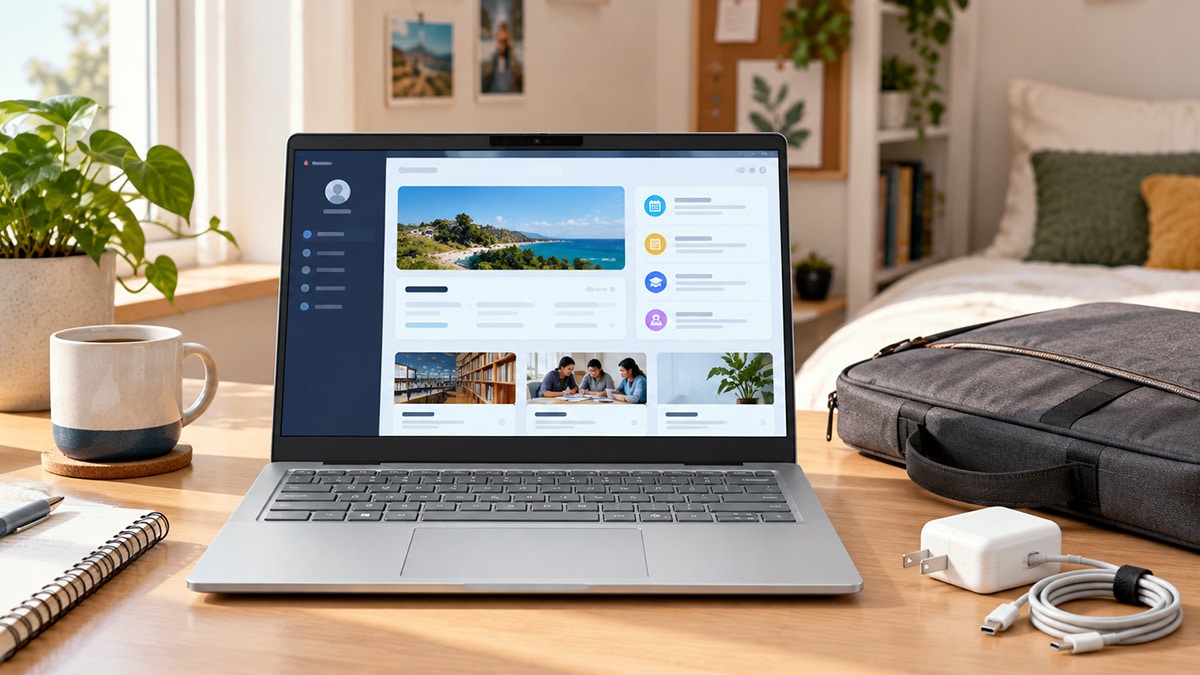
Laptop idea: The Dell 14 Plus is a good student option for travel. Dell lists the 14-inch model at about 31.4 cm x 22.6 cm x 1.7 cm, with a starting weight of 1.55 kg. A 16GB RAM and 1TB SSD configuration gives enough room for browsers, PDFs, Microsoft Office and video calls.
Laptop bag: Use a slim padded laptop bag rather than a thick backpack. The Timbuk2 Commute Messenger Bag 2.0 in medium fits up to a 16-inch laptop and measures about 39 cm x 27 cm x 13 cm. The compact shape leaves room for the charger and a few travel essentials.
Economy travel on Virgin Australia flights allows one standard carry-on bag up to 56 cm x 36 cm x 23 cm and 8 kg, plus one small personal item under the seat in front. A slim laptop bag works well as the small personal item.
Related: Can International Students Study Online in Australia?
Prohibited and Restricted Items
Some things are not worth packing because they are restricted at the border or on flights. Check the official Can you bring it in? tool before packing food, medicine, nicotine products, outdoor gear or anything unusual.
Do not pack: Fresh fruit, meat, eggs, dairy, seeds, live plants or dirty hiking and camping gear. Food, plant and animal products must be declared.
Flight limits: Full-size aerosol deodorant, large bottles, spare batteries and power banks create carry-on problems. Power banks must go in carry-on luggage, not checked baggage. Buy ordinary toiletries after arrival instead of using space on restricted items.
Items Not Worth Packing
While trying to pack light, you can still add items you love or use every day. A few pairs of undies, your favourite shirt, your toothbrush and any essential medications are examples. Most other things can be avoided because you can probably get them cheaply in Australia.
Items that should generally be avoided include:
- Bedding and towels: Buy cheap versions after arrival, especially if your accommodation does not provide them.
- Full-size toiletries: Shampoo, deodorant, sunscreen, soap and other basics are easy to buy in Australia.
- Stationery: Pens, notebooks, folders and sticky notes are easy to find.
- Printed documents: Store scans and offline copies instead of carrying a folder.
- Books: Course materials are usually available through the LMS, library or digital readings.
- Kitchen gear: Student housing may already have basics, and cheap replacements are easy to buy.
- Too many clothes: Bring enough for arrival. Add cheap extra items later if the weather or your routine requires them.
You shouldn’t have to bring any Australian currency (cash) with you. Australians rarely use cash, with digital transactions the normal way of paying. Just make sure your cards or phone wallet work before you fly, and bring a physical Visa or Mastercard as backup.
Related: Why Study Abroad in Australia: 10 Reasons
Weather by City
Australia is generally warm, though most study cities still have a winter. Not much preparation is required before flying because T-shirts and shorts are standard for much of the year. Add warmer clothing after arrival if you need it.
Cooler cities: Hobart, Melbourne and Canberra need warm clothing in winter. Pack a jumper and jacket if you are arriving in the colder months, then buy anything extra in Australia.
Milder cities: Sydney, Adelaide, Perth, Brisbane and the Gold Coast have mild winters. One warm jumper and a jacket are about enough for most students.
Tropical cities: Darwin, Cairns and Townsville do not need winter clothes. Light clothing and rain protection are enough for weather planning.